
If you’re buying healthcare uniforms for the first time, it’s easy to assume that scrubs and tunics are the same thing. After all, both are commonly worn in healthcare settings and both are designed to provide comfort, practicality and a professional appearance.
However, there are some important differences between the two.
Choosing between scrubs and tunics often comes down to your role, working environment, branding requirements and personal preference. While many modern healthcare professionals now favour scrubs, tunics continue to play an important role across care homes, dental practices, veterinary clinics and healthcare environments throughout the UK.
This guide explains the key differences between the two uniform styles, their advantages, and how to decide which option is right for your team.
What Are Scrubs?
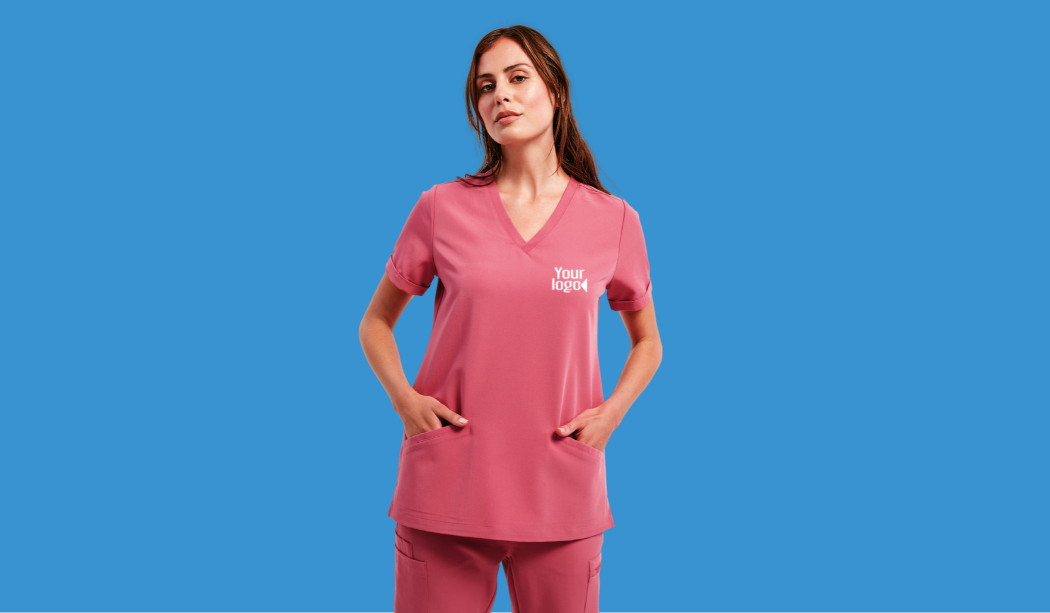
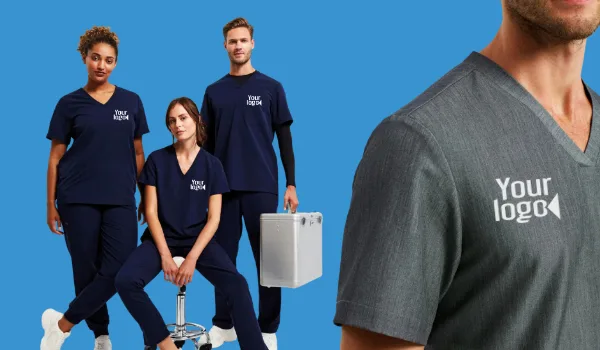
Scrubs are a two piece healthcare uniform consisting of a scrub top and matching scrub trousers.
Originally developed for use in operating theatres, scrubs have become increasingly popular across almost every area of healthcare thanks to their comfort, practicality and professional appearance.
Today’s healthcare professionals commonly wear scrubs in:
- Hospitals
- GP surgeries
- Dental practices
- Care homes
- Veterinary clinics
- Pharmacies
- Cosmetic clinics
- Healthcare training environments
Modern premium scrubs are designed with performance fabrics, stretch materials and practical features such as multiple pockets to support demanding shifts.
Brands such as Cherokee Scrubs have helped drive the popularity of scrubs by combining comfort, durability and contemporary styling.
What Are Tunics?
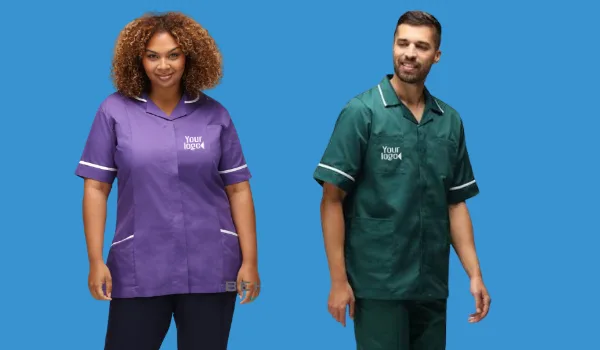
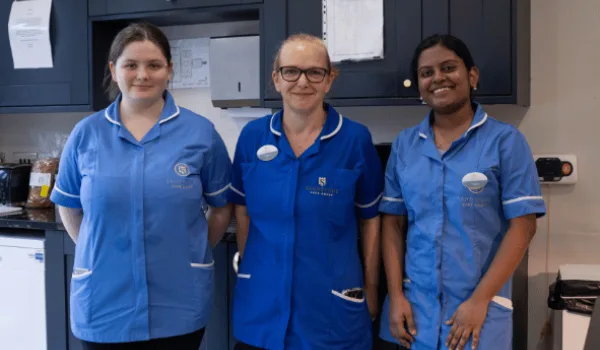
A tunic is a longer healthcare top that is typically worn over trousers.
Tunics have traditionally been associated with nursing uniforms and remain a popular choice across healthcare and care environments.
Unlike scrubs, which are designed as a matching two piece set, tunics are usually purchased as a separate garment and paired with trousers chosen by the employer or employee.
Healthcare tunics often feature:
- Front zip or button fastenings
- Contrast colour trims
- Shaped or fitted designs
- Multiple pockets
- Longer line styling
Tunics can create a more formal appearance than scrubs and are often chosen where a clearly recognisable healthcare uniform is preferred.
What Is the Main Difference Between Scrubs and Tunics?
The simplest difference is in their design.
| Feature | Scrubs | Tunics |
|---|---|---|
| Design | Two piece matching set | Separate healthcare top |
| Fit | Relaxed and practical | More structured and fitted |
| Appearance | Modern and clinical | Traditional and professional |
| Typical Use | Hospitals, surgeries, dental practices | Nursing, care homes, healthcare settings |
| Styling | Unisex options available | Often available in specific men’s and women’s styles |
While both serve the same purpose, scrubs generally prioritise ease of movement and comfort, whereas tunics often place greater emphasis on presenting a traditional healthcare image.
Do Tunics Look More Professional?
Not necessarily, but they do create a different impression.
Tunics are often associated with traditional healthcare uniforms and can make staff immediately identifiable to patients and visitors.
Many care homes and nursing environments continue to favour tunics because they provide:
- A recognisable healthcare appearance
- Consistent staff presentation
- Suitable for embroidery
- Easy role differentiation through colour coding
Meanwhile, scrubs have increasingly become the standard professional uniform across hospitals and clinical settings.
Today, patients are just as accustomed to seeing healthcare professionals wearing scrubs as they are traditional tunics.
Which Healthcare Professionals Wear Scrubs or Tunics?
Both scrubs and tunics are widely used across the healthcare sector, but they’re often favoured by different types of roles and working environments.
| Scrubs are commonly worn by | Tunics are commonly worn by |
|---|---|
| Nurses | Care home staff |
| Doctors | Community healthcare teams |
| Surgeons | Nursing professionals |
| Dentists | Care assistants |
| Dental nurses | Residential care workers |
| Pharmacists | Reception and support staff |
| Healthcare assistants | Domiciliary care workers |
| Veterinary professionals | Healthcare support teams |
| Cosmetic practitioners | Clinic administration staff |
Scrubs are particularly popular in fast paced clinical environments where comfort, mobility and practicality are essential. Their relaxed fit and matching two piece design make them ideal for long shifts and active roles.
Tunics, on the other hand, remain a popular choice in care and community settings where a more traditional healthcare uniform is preferred. Their structured appearance can help create a professional image while making staff easily identifiable to patients, residents and visitors.
Where Do Tabards Fit In?
While discussing healthcare uniforms, it’s worth mentioning tabards, as they are often confused with both scrubs and tunics.
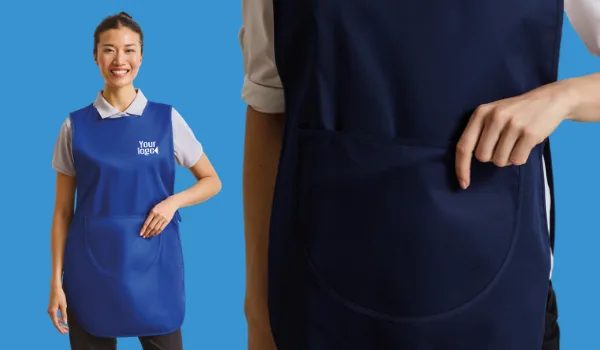
A tabard is an overgarment worn on top of regular clothing or uniforms.
Tabards are commonly used for:
- Cleaning teams
- Housekeeping staff
- Care homes
- Catering teams
- School catering services
- Support workers
Unlike scrubs and tunics, tabards are primarily designed to protect clothing underneath and help identify specific roles within a workplace.
Many healthcare organisations use a combination of tunics, scrubs, and tabards depending on the responsibilities of individual team members.
How Are Healthcare Providers Using Branded Uniforms?
Uniforms are about more than simply helping staff look professional. They can also play an important role in creating consistency across multiple locations and making team members easily identifiable to residents, visitors and families.
For example, Sandstone Care Group partnered with Clothes2order to create a consistent uniform solution across its care homes. With teams working in a variety of roles, it was important that garments were comfortable, practical and professional, while also helping reinforce the Sandstone brand. By introducing branded healthcare workwear featuring their logo, the organisation was able to create a more unified appearance across its workforce and make staff instantly recognisable within care environments.
This approach is becoming increasingly common across the healthcare and care sectors, where organisations are looking for uniforms that balance comfort, functionality and a professional image. or a combination of both, choosing high quality garments can improve staff comfort and create a consistent appearance across your organisation.
Final Verdict
The main difference between scrubs and tunics is their design and intended style.
Scrubs are two piece uniforms designed for comfort, practicality and unrestricted movement. They have become the preferred choice across many modern healthcare settings.
Tunics are standalone healthcare tops that provide a more traditional and structured appearance. They remain popular across nursing, care and community healthcare environments.
Neither option is inherently better than the other. The right choice depends on the needs of your team, your workplace environment and the image you want your uniforms to project.
For many organisations, a combination of scrubs, tunics, tabards, and professionally branded embroidery offers the perfect balance of practicality and professionalism.
Ready to Upgrade Your Healthcare Uniforms?
Explore healthcare workwear at Clothes2order designed for comfort, professionalism and durability, with custom embroidery available to help your team look the part every day.

